
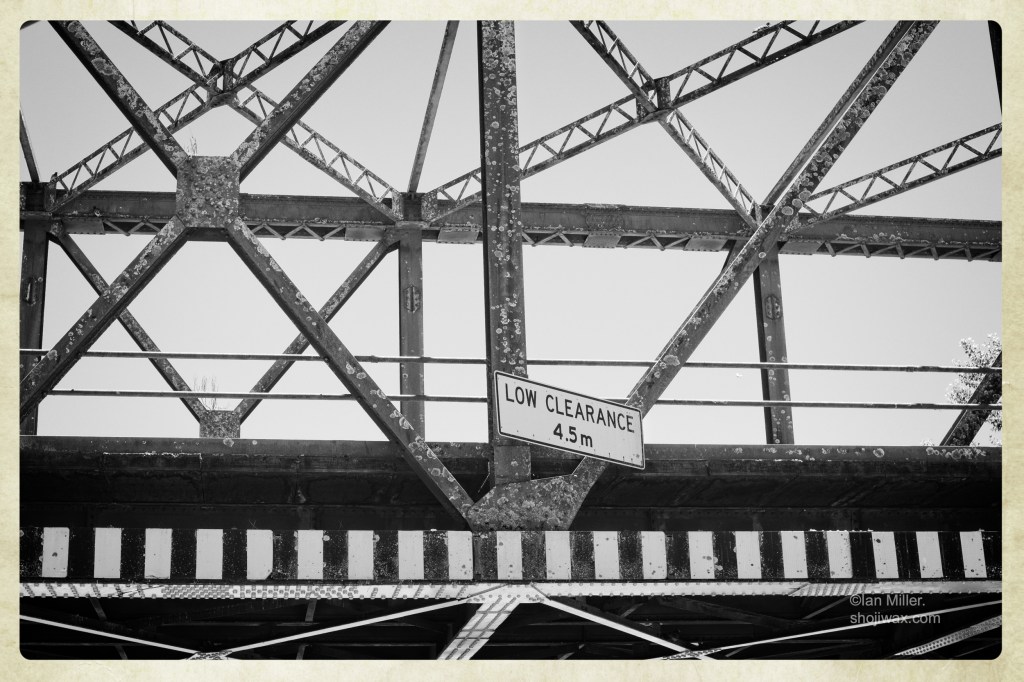
I did not even notice the small clumps of lichens growing on the cross-spars of this railway bridge until I was editing the photo.
Lichens are mysterious and fascinating organisms that we usually dont even notice as we look at other things. In Australia alone, there are 3,500 known species of lichenised fungi.
Lichens, or lichenised fungi, are organisms made up of a fungus and one or more algae or a cyanobacterium in a symbiotic relationship.
The non-fungal partner in these organisms is referred to as a photobiont and is able to manufacture carbohydrates through photosynthesis. The fungus or mycobiont, like all fungal species, must obtain carbon from living matter and ‘harvests’ it from the algae.
The fungus protects the photosynthetic cells in a tissue known as the thallus, anchoring to a substrate, and absorbing water and nutrients. The cyanobacteria or algal cells provide the fungus with carbohydrates from photosynthesis. This symbiotic relationship allows lichens to thrive in inhospitable environments, such as directly on rock.
— Fungimap.org.au
If you squint at my photo, you can see them. I like to think that they are patiently crossing the bridge on a timescale that we can only pseudo-fathom.


 shojiwax.com
What say you? Please leave a comment!