
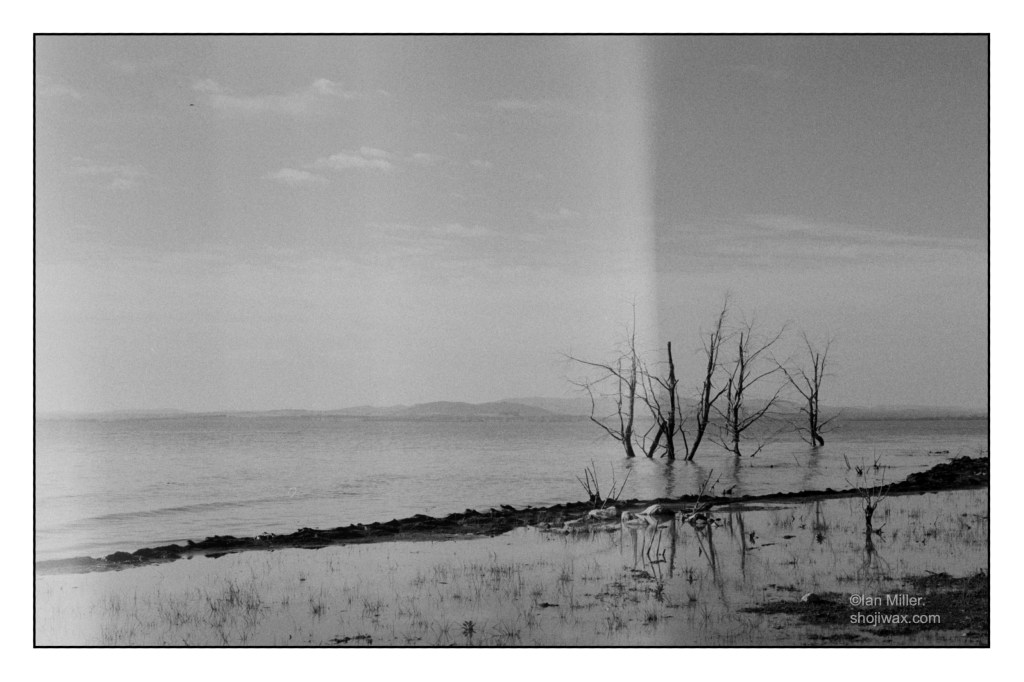
A (yet another) alarming report has just been published by the Australia Government red flagging our future as the planets climate continues to degrade.
You have probably heard about the alarming predictions what with all the mass media coverage of this report.
No?
*long sigh*
Read the full report here (pdf).
The response to these (often high or very high confidence) predictions needs to be a transformational (think: a scale greater than the UK response and mobilisation during WWII) one at all levels of government, business and social structures. Both to minimise the awfulness and, for a great number, to survive it.
Yet I see nothing from our leadership apart from lip service, kowtowing to corporate and big oil influences, cross-party mud slinging, and distraction. We are so screwed.
If the full report is too much….here is a sampler:
Key insights for Australia’s changing climate
(I have highlighted some of the impactful bits.)
Climate change is increasing the frequency and severity of many climate and weather events. These events disrupt society and/or the natural recovery of an environment and will have a significant impact on our communities.
New research by the Australian Climate Service (ACS) shows that climate change has and will change the natural hazards that communities experience, this will impact Australia’s disaster resilience.
— National Climate Risk Assessment
- No part of Australia, its territories or its areas of responsibility is immune from climate change (high confidence). The effects and impacts of climate change are already being experienced across Australia’s land, oceans and atmosphere, and will increasingly be felt over the coming decades.
- The rate and magnitude of climate change under high versus low global temperature increases imply two very different futures for Australia (very high confidence). While climate projections with smaller increases in global temperature will result in impacts to Australia, a future with higher global warming will bring significant changes to Australia’s climate with greater potential impacts on human health, infrastructure, the environment and the economy. Projections with smaller future increases in global warming can only occur if Australia and other countries rapidly reduce greenhouse gas emissions to net zero in the near future.
- Future changes in Australia’s climate will not occur gradually or smoothly (very high confidence). Changes in climate and its impacts due to increased global warming will not be experienced as a gradual incremental change. Climate change will be experienced in many ways, including increased climate variability, rapid acceleration of some trends, the crossing of important or irreversible thresholds, bio-physical responses to shocks triggered by random events such as large volcanic eruptions, and step‑like changes.
- The chance of triggering multiple abrupt changes or surpassing critical tipping points that will impact Australia rises with every fractional increase in global warming (high confidence). By 2100 Australia could experience impacts from abrupt changes in Australia’s water catchment behaviour (medium confidence), large increases in monsoon variability and abrupt poleward shifts of storm tracks in the south (low confidence). Some global climate tipping points may be triggered this century or next, including irreversible ice sheet losses in West Antarctica and Greenland (with rapid sea level rise) and irreversible collapse of significant ocean circulations (with associated weather pattern changes).
- No change to any one aspect of Australia’s climate will exist in isolation (very high confidence). Changes in one climate variable will feed back and affect many or all other aspects of our weather and country, both locally and remotely. Compounding, cascading and concurrent climate change-related events will have far greater effect in Australia than individual events in isolation.
- Stabilising global temperatures at +1.5ºC, +2.0ºC or +3.0ºC above preindustrial temperatures will stabilise some, but not all, climate impacts (high confidence). For example, oceans and coastlines will continue to experience change for centuries (high confidence). While most atmospheric and land-related climate changes have the potential to stabilise relatively quickly when global temperature stabilises, aspects of Australia’s climate will continue to change. Vegetation changes and dune reorientation may continue for centuries. Oceans will warm, rise, acidify and deoxygenate for centuries to millennia (high confidence) as the oceans absorb heat (and carbon) from the greenhouse driven energy imbalance. Some changes already in the system (e.g. sea level rise) are locked in for centuries and longer.







 shojiwax.com
What say you? Please leave a comment!